Forklift Training Cape Town – Accredited Programme for Immediate Employment

Forklift Training Cape Town is positioned at the intersection of logistics demand and workforce readiness. Across distribution centres, manufacturing facilities, and port operations, forklift operators form a critical layer of operational execution. Every pallet moved, every shipment loaded, and every storage system maintained depends on individuals who can operate equipment with precision and control.
This course is not designed as a theoretical overview. It is structured to produce operators who can enter a workplace and function immediately. Employers are not looking for potential—they are looking for competence. Venice Machine Training aligns its programme with that expectation by focusing on real-world application rather than abstract instruction.
In Cape Town, industrial zones require continuous material handling. That demand translates directly into employment opportunities for certified operators. Completing forklift training provides access to roles where productivity, safety, and efficiency are measured daily. The objective is straightforward: acquire the skill, demonstrate competence, and transition into paid work without delay.
Industry Context: Operational Demand and Workforce Requirements
The logistics and industrial ecosystem in Cape Town is built on movement. Warehouses, distribution centres, and manufacturing plants rely on forklifts as the primary mechanism for handling goods. These machines are not optional tools—they are essential infrastructure within supply chains.
Key operational zones such as Epping Industrial, Montague Gardens, and Airport Industria process high volumes of goods daily. Each of these environments requires operators who can:
- Handle loads without causing damage
- Navigate confined spaces efficiently
- Maintain consistent operational flow
- Follow strict safety protocols
Without trained operators, these systems experience measurable decline. Untrained individuals often misjudge load capacity, fail to maintain stability, or operate without awareness of surrounding hazards. The consequences include damaged inventory, equipment breakdown, and workplace incidents.
From an employer perspective, hiring uncertified individuals introduces unnecessary risk. For this reason, certification has become a baseline requirement rather than an advantage. Training is not about learning to drive—it is about understanding the operational system in which the forklift functions.
TETA: 19-1157
LMO: 858
QCTO: 01-QCTO/SDP090326161546
Accreditation serves as verification of training quality and compliance. Employers use accredited certification as a filter during recruitment because it confirms that a candidate has been trained according to recognised standards. In regulated work environments, this distinction determines whether an individual is eligible for employment.
For learners, accreditation provides more than credibility—it provides access. It ensures that the qualification is recognised across industries, enabling operators to move between roles and locations without barriers.
Why Forklift Training Matters in Practice
Operating a forklift involves understanding mechanical behaviour, spatial awareness, and safety dynamics simultaneously. These elements interact continuously during operation, making training essential for safe and efficient performance.
Consider the following operational requirements:
- Load balance determines stability during lifting
- Turning radius affects maneuverability in confined spaces
- Surface conditions influence traction and control
- Operator visibility impacts safety decisions
Without structured instruction, these variables are often misunderstood. Training provides a framework for analysing each situation and responding appropriately. This analytical approach distinguishes trained operators from untrained individuals.
Employers expect operators to function independently, which means:
- Performing pre-operation inspections
- Identifying hazards before they escalate
- Adjusting operations based on load conditions
- Maintaining consistent performance under pressure
Training bridges the gap between basic familiarity and professional competence, enabling operators to meet these expectations consistently.
What You Will Learn
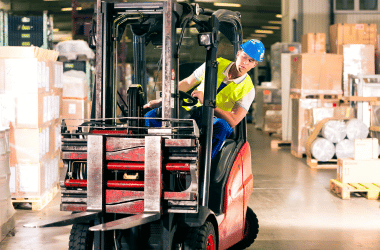
The course is structured around operational understanding and practical execution. Each component builds toward full competence in workplace conditions.
- Machine Components: Understanding the mast, forks, hydraulics, and counterweight ensures correct interaction with the equipment.
- Operational Controls: Learning how to manage speed, direction, and lifting mechanisms enables precise handling.
- Load Handling: Recognising weight limits and distribution prevents instability and damage.
- Safety Procedures: Conducting inspections and following protocols reduces risk.
- Workplace Communication: Coordinating with other operators and staff improves efficiency.
Each concept is not only explained but applied. Learners perform tasks that reflect actual job requirements, ensuring that knowledge translates into action.
Practical Training and Workplace Simulation
Hands-on experience is the defining element of competence.
Practical sessions replicate real work environments. Learners operate forklifts under conditions that mirror warehouse and industrial settings. This includes:
- Lifting and stacking loads
- Navigating narrow aisles
- Executing safe parking procedures
- Handling equipment under supervision
The objective is to ensure that learners can perform independently by the end of the programme. This level of readiness aligns directly with employer expectations.
Certification and Compliance
Forklift training aligns with SAQA Unit Standard 242974, which governs the operation of counterbalance lift trucks. Certification confirms that the learner has achieved the required level of competence.
- Recognised across South Africa
- Required for employment
- Aligned with safety regulations
Certification is not optional. It is a requirement that ensures operators meet industry standards and can function within regulated environments.
Job Outcomes and Employment Opportunities
Forklift operators are employed across multiple sectors, each requiring consistent material handling. These include:
- Warehousing and distribution
- Manufacturing facilities
- Retail logistics operations
- Port and shipping environments
In Cape Town, key employment hubs include:
- Epping Industrial
- Montague Gardens
- Airport Industria
- Cape Town Port
These locations represent the core of industrial activity, providing continuous demand for certified operators.
Salary and Career Progression
Forklift operators typically earn between R5,000 and R12,000 per month, depending on experience and role complexity.
- Entry-level positions provide immediate income
- Experienced operators access higher-paying roles
- Supervisory positions offer long-term growth
Career progression is based on performance, reliability, and exposure to advanced operations.
Location Advantage
Venice Machine Training is strategically accessible from key areas:
- Bellville
- Khayelitsha
- Delft
- Gugulethu
This accessibility ensures that learners can transition directly into nearby employment opportunities within industrial zones.
Requirements
- Valid ID or Passport
- Basic literacy
- Personal Protective Equipment (PPE)
These requirements ensure safe participation and effective learning throughout the course.
Why Choose Venice Machine Training
Venice Machine Training focuses on practical competence and job alignment. The programme is structured to deliver skills that are directly applicable in workplace environments.
- Accredited certification
- Hands-on instruction
- Fast course completion
- Job-focused training approach
This structure ensures that learners move efficiently from training into employment.
Start Your Forklift Training Today
Apply HereFrequently Asked Questions
How long does the course take?
Training typically takes 3–5 days depending on experience.
Do I receive certification?
Yes, accredited certification is provided upon completion.
Where can I work after training?
Warehouses, logistics companies, and industrial operations.
Is certification required?
Yes, it is mandatory for employment.
Where is training located?
Accessible from Bellville, Khayelitsha, Delft, and Gugulethu.